Showing posts with label the evil within. Show all posts

The Gothic and Victorian Affinities of Contemporary Horror Games

Monday, 3 November 2025

In the dark and twisted world of the villains in horror games, of the powerful evil characters who pull the strings from the shadows until they eventually make their grand appearance, there is one very special category that usually stands out, that of the evil masterminds who share a strong and unhealthy attachment to the past of their families. Whether their ancestors were glorious or not, most of the times does not matter, as what these complex personalities do is to appear as living representations of their illustrious past, something that, however, rarely - if not at all - gives justice to their noble past. The environments in which these people live, corrupted both literally and metaphorically, are characterized by the presence of gothic and Victorian-era elements which further support the pomposity of their owners and, occasionally, their sadistic tendencies.

The now iconic Spencer Mansion in the very first Resident Evil and its subsequent remakes is one such memorable case. The vast, intimidating villa, with its hidden passages, secret corridors, locked rooms, secluded gardens and spooky basements, is a most characteristic example of an environment that essentially stars in the story where it appears, as the lead characters, Chris and Jill, find themselves trapped inside the house almost as soon as the game begins, with no obvious way out as the area just outside the main entrance is guarded by bloodthirsty dogs. All other exits seem to be locked and getting out requires a long and suspenseful search for keys, mutli-functional objects and puzzle solving, as well as battling dangerous enemies that roam the mansion's grounds. Everything in the villa is vintagey, including its decoration, furniture and other items, but its most creepy feature is the absence of any other human beings, except for our protagonists.

Somewhere in the twisting corridors of a nearly separate wing, there is a vitraux portrait of a girl who once used to live in that place. This was not many years ago, but the vitraux depicts a woman dressed like she comes from a very distant era, alluring to a nostalgic - significant for the house's once human inhabitants - Victorian style, something that matches the overall atmosphere of the mansion and reaches the limits of tragedy when it is revealed that Lisa, the beautiful girl of the portrait, now wanders around the countryside outside the villa in the form of a terrifying, mutated creature. 

Locked in his vast, mazey castle, Ramón Salazar of the original Resident Evil 4 is a sad remnant of his aristocratic and once distinguished family, contemplating the glory of his ancestors while doing very little to live up to their example. The whole area where the castle is located, together with the village close to it and several other installations, seems to be lost in time altogether: the houses look like they belong to at least half a century back and there are farming systems that are made of defunct materials; but it is in the castle grounds where the whole "lost-in-time" eery feeling is intensified, as the heavy, rich decoration comes to contrast with the corruption that runs in all its halls, creating a chilling, unsettling atmosphere.

Salazar himself likes to dress like a gentleman of centuries back, although his whole attitude is not gentlemanly at all. Just like his residence, his appearance as well is a huge guise, like an attempt to make the other people, whom he basically hates, see him like he would have liked to be: an esteemed aristocrat with an illustrious past and an even more impressive present. Instead, he is a caricature of all this, something that is mostly intensified by his nasty demeanor, his innate sadism and the fact that he never felt accepted by his family. 

This last element was not so evident in the original game, but it is of major importance in the recent remake, where Salazar is presented as much more cruel and sadistic, also carrying a stigma which, apparently, he was never able to get over: it is hinted that he may have been his mother's illegitimate son, if you take notice of certain things that he yells out during Leon's final battle with him, and the fact that there are a few portraits in the castle that may be confusing as to who exactly all these ancestors were and what their relationship to Ramón might have been. Setting aside the tragic aspect of this, as a fact it also relates to stories of the Victorian era, about illegitimate children and lost families.

Equally his revamped castle in the remake features extravagant objects and overwhelming decoration, always inspired by a past where Gothic and Victorian elements were prominent. Notably all the portraits that can be seen on the walls are of people that belonged to past eras; and all the paintings depict dark and gloomy landscapes, and even disturbing, morbid scenes with a strong gothic element as well.

Alfred Ashford of Resident Evil: Code Veronica has some things in common with Ramón Salazar, albeit he is much more dangerous because, thanks to his rank as an army officer, he can additionally handle weapons excellently. Alfred appears dressed in an old-fashioned army uniform with a red jacket adorned with medals and white pants; we can't know for sure if the medals are his or belonged to his ancestors, but it is obvious that he too, just like Ramón, is a delusional, paranoid man who refuses to connect to reality as it is, something that has an explanation, since he may have always been marginally insane, but he completely lost his mind after the "death" of his beloved twin sister, Alexia.

Alfred lives in a lush vintage mansion which, in spite of its undeniable charm, is quite cold and eery, due to the gothic-like decoration which sometimes reaches the limits of grotesque and kitsch. There is too much gold all around, as well as huge, intimidating statues that mostly have negative or unpleasant connotations. Like Ramón's castle, the Ashford Mansion as well is a maze of twisting staircases, hidden passages, secret doors, lethal traps, complete with a well-concealed path to a secluded private manor, the Ashford palace, which used to be the residence of Alfred's family. Both villas share the same eery atmosphere, which makes wandering in their grounds a living nightmare.

When Alexia eventually wakes from her slumber and makes her appearance, we see her dressed in a luxurious but very vintage fashion, with a long purple dress, white silk gloves that go over her elbows and exquisite, precious jewellery, evoking the image of ladies in century-old portraits as well as heroines of Victorian novels and Romantic poetry.

Notably, as can be seen in the screenshot above, the family portrait behind her depicts the patriarch of the family, Alexander Ashford, Alexia herself and Alfred. All three are again dressed in a vintage fashion, and the overall style of the portrait is following guidelines of family portraits of the past.

James Marcus, the twisted scientist from Resident Evil Zero who experimented on his students in the most appalling ways, appears as a young man with long hair who is wearing a long, white gown, pretty similar to those worn by men in the distant past. Albeit operating in the mid-60ties mostly, Marcus has a fascination with the old times, something that is also evident from several objects found in his lab. It is notable that details on his outfit, specifically the shape of the collar, resembles leeches, which were part of his experiments before he became the terrifying Queen Leech himself.

Much less creepy in appearance, but quite unsettling as a personality, Donna Beneviento from Resident Evil: Village walks around dressed exactly like a mourning Victorian lady, a look that is preserved also in the huge portrait that decorates one of the walls of her old-fashioned residence. The house itself has several vintage objects, and even mechanisms that are not particularly modern (like the elevator leading to the basement the technology of which is rather old), but you could say that is more or less a typical village house which has not modernized itself enough yet. Donna herself, however, as a presence and appearance, is the exact incarnation of the gothic and Victorian affinities of horror games, maybe more than any other villain similar to her.

In the same spirit, the coach that the Duke can be seen driving near the end of the game, transporting Ethan to the altar to fight against Miranda and save Rose, looks eerily like a Victorian hearse, complete with its black horse and the lanterns to light the way in the darkness.

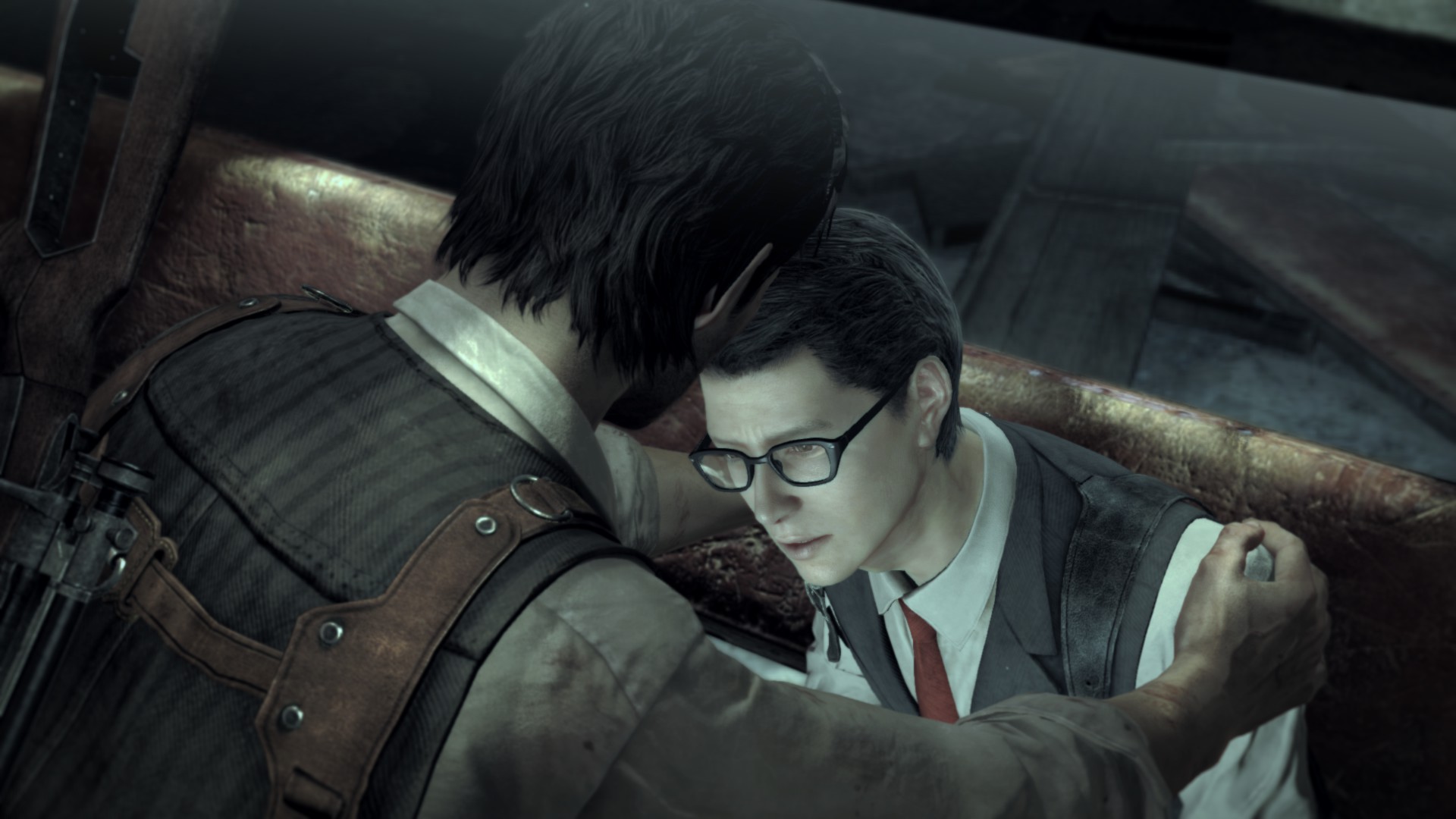
Taking place almost entirely inside an insane man's mind, The Evil Within is comprised of images that are mixtures of past and present, of memories and a distorted reality, and as such its environments defy any normal perception of how they truly are, if they even exist for real. Once trapped in Ruvik's twisted game, Sebastian constantly finds himself, scene after scene, in places that do not make sense, as they seem to be lost in time and space. Starting with the village where all the houses are old, derelict and deserted, including the narrow spaces with the vintage mirrors that work as passages back to the safe haven, nearly all the areas that Sebastian has to cross are a tangle of elements that could never co-exist in real time.

As the story approaches its tragic revelation, the environments become more and more unsettling and confusing, as Ruvik's memories get mixed with the memories of his victims, creating a nightmarish and nauseatic space where everything is messed up and which offers no obvious way out. Old buildings, vintage installations, objects from the past, all thrown together in places that seem to carry a significance for the people involved, yet all this is too blurred to even make sense. 

In the heart of all this, Ruvik's family mansion finally comes to the foreground, appearing as a compelling villa with both gothic and Victorian elements which of course come together with the unavoidable atmosphere of fear and disturbing mystery. Drowned in fog, in the center of a rotting garden, Ruvik's home turns out to be the beginning and the end of his life's tragedy.

But most of all, The Evil Within's Gothic and Victorian affinity is shown in the characters themselves: after Sebastian solves one of the phrenology puzzles in the secret room behind the fireplace in the bedroom of Ruvik's parents and gets back out in the room itself, he has a vision of Ruvik standing over the dead bodies of his mother and his father, whom he had just killed with his own hands. Both his parents are dressed in a fashion going centuries back.

And like in Donna Beneviento's case, the Victoriano family showcases all its Gothic and Victorian gloominess in the portrait that depicts its four members, dressed like they come straight out of a novel by Wilkie Collins or Charles Dickens.


This peculiar mix of past and present is one of the most charming elements of horror games, as its roots go back to classic thrillers, both of literature and cinematography. For the environments specifically, think about novels like Rebecca or Bleak House, where the mansions as ambiences play a major role in both the development of the stories and the overall feeling of uncertainty and fear. Such emblematic fictional settings are a constant point of reference in contemporary horror fiction, video games included; and so are their lead characters, equally protagonists and antagonists. As to why in video games it is always the villains who choose to present themselves as figures of the past, maybe it is because for most of them it is by default impossible to exist among people, as they all carry huge traumas that they cannot or are not willing to even try to heal, and their attachment to the old times keeps them secluded in a world of their own, while at the same time distinguishes them from the masses that they usually despise as well.


Dario Argento and David Lynch's Influence in the Resident Evil & The Evil Within Games

Sunday, 22 December 2024

Survival horror is definitely not a genre for all audiences. Although not always explicitly gory, video games that belong to this category are mostly characterized by a set of unique traits, that set them on a level of their own. During the years they too, just like all other genres, have gone through several different stages and developments, but their core remains consistently the same: the depiction of a stressing, chilling atmosphere, most often with hints of metaphysical elements and an overall feeling that simulates that of experiencing a nightmare. The lead characters, usually stranded or trapped, are being chased by terrifying enemies who sometimes are monsters, and other times are humans acting as such. Survival gradually becomes their main concern, while at the same time they are looking for ways to and means to fight those enemies and finally defeat them. Throughout their still vivid history in the gaming industry, survival horror games have been and still are influenced by emblematic thriller, horror and mystery films that, most of the times, gained a cult following with the passing of time. In this article, I will focus on two game series, The Evil Within games and the Resident Evil saga, and how they were influenced by two one-of-a-kind film-makers, Dario Argento and David Lynch.

Dario Argento (left) and David Lynch (right)

Dario Argento is the Italian creator of many unforgettable giallo films. Giallo means yellow in italian and the term is used to describe horror movies of the 70ties and 80ties, where gore was particularly prominent. Argento is a master of horror and his giallo films left an indelible mark in the movies industry. Combining pure, raw gore with lush, extravagant settings or contrasting his twisted plots with idyllic environments, almost always with raucous heavy metal music playing in the background, his films are, interestingly enough, mostly memorable for their unique cinematography, the ingenious ideas when it comes to mystery, and the use of unexpected elements as important plot points. 

Suspiria (1977)

Argento's films are full of symbols, allegories and the multi-leveled use of elements and objects. In his iconic Phenomena (1985), the protagonist is Jennifer, a young girl who sleepwalks and has the unique ability to communicate with insects. Jennifer also comes from a not so usual home: her parents are divorced, and her father is a famous actor who, however, never appears physically in the film. The way that Argento chooses to present her is very interesting: typically, she has the characteristics of a fairy tale heroine, with elements of the stereotypical damsel in distress archetype, but the story follows her as she deals with dangers almost all alone; and the man who at some point runs to her rescue is neither a love interest nor a knight in shining armour but her father's lawyer, who however gets morbidly murdered before being able to offer her assistance. Jennifer has no love interest, anyway, she prefers being alone and the company of an old entomologist, whose pet is a female chimpanzee called Inga.

Jennifer with the professor and Inga, and the various insects in glass cases and photos

Jennifer's ability to communicate with insects is referenced in Alexia's power to control the ant colony in her mansion in Resident Evil: Code Veronica, in Natalia's understanding the messages of the larvae in Resident Evil: Revelations 2 and, in a grotesque version, in Marguerite's bond with her beloved flies in Resident Evil 7. Insects are featured quite often in video games, and in the Resident Evil universe their appearances are always of major importance. Derek Simmons's final mutation in Resident Evil 6 was a giant fly; the huge mosquito-like monsters in Resident Evil 4 were among the saga's most hateful enemies; and who can forget the wasp hive in the lab at the Spencer mansion in the first Resident Evil game. All these of course go back to Franz Kafka's iconic novella Metamorphosis (1915), in which the protagonist Gregor Samsa transforms into a giant insect.

Jennifer (left) and Natalia spotting insects in the forest

Argento develops his story in the form of a fairy tale, adding elements in the way that gradually widen the gap between magic and reality. Jennifer's dream world - or, better, in this case, her nightmare journey - consists of sleepwalking and having disturbing visions associated with murder. Her communicating with flies is her safe haven, and it is actually the insects that lead her to getting to the bottom of the horror-filled mystery of the story. Jennifer is a student in a boarding school where the governess is a woman with a troubled past and a more troubled present. Her dark secret is the existence of a child, result of her being raped by a mentally ill man in the asylum where she previously worked. The child, grotesquely deformed due to a medical syndrome, is hidden in what seems to be an abandoned house and is the one responsible for the murders that Jennifer sees in her sleepwalking sessions. While investigating the house, Jennifer falls in a pool filled with maggots and disintegrating human limbs. A bit later, the sick boy shows up and attacks her. At this point, her sleepwalking nightmares identify abruptly with the reality she is experiencing, and her only way to make it out alive is to summon her loyal friends, her insects, that rush to kill her monstrous pursuer.
 
Jennifer in the pool of terror

Jennifer's fall in the gruesome pool is a symbolic descend to Hell, more accentuated by the fact that said pool is in the basement of the house. This scene is referenced in The Evil Within, during a sequence close to the beginning of the game. Sebastian, the lead character, has just been separated from his partners while investigating a massacre at a mental hospital. Unbeknownst to him, he enters a sick man's mind and all that he experiences are distorted segments of memories and monsterized versions of reality's fragments. In this twisted world, he finds himself chased by a butcher / executioner who walks around yielding a chainsaw. In his struggle to escape him, Sebastian falls in a bloody pool, where human limbs gradually come to the surface. Jennifer and Sebastian have a lot things in common, their innocence and purity of mind being the most obvious and most crucial for the development of their stories. Just like Jennifer sleepwalks unwillingly, Sebastian finds himself wandering inside Ruvik's mind, both unable to escape for as long as these situations last. But while Jennifer's fall in the symbolic Hell happens at the end, marking the start of the catharsis process, Sebastian's fall in a similar Hell takes place at the start, dragging him deeper and deeper in the monster's twisted mind.

Sebastian in the bloody pool

Profondo Rosso (Deep Red, 1975) is another emblematic movie by Dario Argento, which is much gorier than Phenomena, but its main theme is that of mystery and suspense. Horror in Profondo Rosso is created primarily by the feeling of unknown and a disturbing sense of insecurity caused by the constant fear that someone is watching from a well-hidden spot, while the extravagantly violent scenes are used as a frame that essentially holds both the characters in the film and the viewers in the grip of Argento's very unique view of a thriller movie. Set around a series of particularly gruesome killings, the film follows Marcus, a musician who witnesses one of the murders, as he investigates the case to which he gradually seems to be connected in a rather weird way. The movie contains one of the most shocking twists in cinema history, which does not have to do with the identity of the killer, but with how said killer is revealed in a very early and completely unsuspected sequence in the story. 
 
Marcus suspects that he might know the killer
 
Profondo Rosso is definitely not recommended for the average viewer, but to this day it remains an exemplary piece of cinema art, blending masterfully its extremely gory scenes with exploration of mystery at its finest. It is films like this that defined the horror movies that would follow, as well as survival horror games. Resident Evil 3 makes a great tribute to both this exquisite film and its genius creator, by naming a secondary but rather important character Dario Rosso (his name from the director's name, and his surname from the movie's title). He is the civilian whom Jill finds locked in his van at the start of the game, and she tries to persuade him to follow her to safety, but he insists to stay in his hiding place in a panic state. The interesting thing about him is that his fate is unknown, as we do not have another chance to meet him and we can never be sure whether he survived or zombies got to him in the end and ate him alive. In the sequence where he appears, Dario Rosso represents all the panicked civilians who found themselves all of a sudden in a zombie-ridden city, not knowing what caused all this, and with a vague, dark and cut-short future awaiting them.

Dario Rosso is about to hide in his van forever

David Lynch is yet one more film-maker whose influence can be seen in almost all aspects of artistic expression. The creator of the famous Twin Peaks series is also responsible for some of the most impressive and exceptional artschool movies of contemporary cinematography, his trademark being the use of connotations combined with the stream of consciousness way of story narration. Lynch's dreamy landscapes and environments are presented as tangible depictions of artistic inspiration, often deliberately appearing as theatrical sceneries or backstage setups, with the director breaking the fourth wall in the most inventive ways and playing with the deepest layers of his heroes' psyche while at the same time challenging the subconscious of his audience.

Inland Empire (2006)

The iconography in Lynch's films is one of the most complex and cryptic, but somehow the ingenious director manages to unlock your mind, leading you to interpret what you see in more than one ways. A master of interior settings, where rooms symbolize the grey matter or the psyche, his movies are highly intellectual and most of them follow a "circular" route. The most characteristic of this kind of cinematography is his masterwork Blue Velvet (1986), a movie with an affinity of layers, and one of those that challenge you to watch them multiple times, and every time with a new perspective. In the film's iconic opening sequence, young and innocent Jeffrey finds a severed human ear in the middle of a field. After taking the macabre finding to the police, he gets entangled in a twisted web of mystery, terror, lust and betrayal, meeting people that seem to belong to a completely different world than his, a world that scares him but which at the same time he finds too attractive to ignore. Heavily inspired and influenced by Lewis Carroll's Alice In Wonderland and Through the Looking Glass (tales that are almost always referenced in his movies), Lynch explores multiple themes in Blue Velvet, one of them being the loss of innocence and the emotional coming-of-age of his hero. The cut ear functions as a passage, just like the rabbit hole did in Alice in Wonderland and the mirror in Through the Looking Glass. For both Alice and Jeffrey, going through these passages is a kind of rite, after which they are called to face the complexity of the human nature in literal and symbolic ways. The ear in Jeffrey's case literally drags him into its labyrinth and leads him to another maze, this time of the real or not so real world in which he finds himself. Set in an idyllic countryside bursting with bright colors, Jeffrey's journey is a nightmare which seems to always bring him in the same central point.

Jeffrey holding the severed ear

A photo of a human ear is one of the pictures that Sebastian sees during the introductory sequences of The Evil Within 2, when he enters Stefano Valentini's disturbing gallery that is spread all around his mind palace. The ear is not a random choice there; Stefano's method of intimidating his potential victims starts with him triggering the sound of a musical piece by Tchaikovsky, heard in such a distorted and haunting way that the beautiful music has an overwhelming paralyzing effect. Stefano "catches" people with sound first, subsequently dragging them into his twisted world, similarly how the cut ear in Blue Velvet caught Jeffrey's attention and eventually lured him in places unknown to him until then. And Sebastian, who shifts between realities through a mirror, simulates Alice's rite of passage through the looking glass, which again identifies with Jeffrey's passage through the ear's labyrinth.

The photo of the ear in Stefano's gallery

Lynch's environments in the Twin Peaks world are iconic dreamscapes, specifically the Black Lodge or Red Room which functions as a virtual meeting place between the protagonist Dale Cooper and select key characters from the series and movies. Comprised of an almost empty space with just a few pieces of furniture and strange shapes on the floor, the Red Room is, as its name suggests, a room where the red color dominates: its walls are fully covered with red curtains and the geometrical pattern on the floor is in fact white and red zig-zag lines. The furniture is three black armchairs, a table, two lampstands and a replica of the statue of Aphrodite of Melos. The room, existing in Dale's mind, functions as a meeting place where he has discussions with people that he had known at some point in his life and played a critical role in certain events that he was involved in. 

Dale Cooper with the Dwarf and Laura Palmer in the Red Room

The Red Room, being essentially Dale Cooper's mind palace, is referenced in the interior of the Grand Theater which is Stefano Valentini's mind palace in The Evil Within 2. A huge building with red curtains hanging from the ceiling and covering parts of its walls, sometimes revealing secret doors behind them, it is a labyrinthine network of rooms where the red color dominates, with certain corners being set up in the style of Dale's Red Room. In both the Twin Peaks' Red Room and The Evil Within 2's Grand Theater, the red color dominates, often making contrast with another color that is among Lynch's preferred ones, which is the bright blue. Stefano in The Evil Within 2 can be seen wearing a blue-mauve suit, and wherever he appears, the environment around him is colored with red and blue shades.

The red curtains are dominating Stefano's mind palace
 
From his part, Stefano Valentini, who uses his camera as a murdering tool, alludes to one of the most creepy characters that David Lynch has conceived, which is the Mystery Man from Lost Highway (1997). A difficult, highly intellectual movie, one of the most riddling and complex that Lynch has directed, it features an array of enigmatic figures, his puzzling protagonist included. The Mystery Man is a secondary character who, however, plays a key role in the main hero's story, although both his appearance and his actions remain partly unexplained till the end. He has a camcorder which he uses to record incriminating events from the protagonist's life, aiming at exposing his double nature. It is notable that the Mystery Man, in his turn, has his origins in another iconic character, Mark Lewis from Michael Powel's Peeping Tom (1960), who used his camera to take shots that satisfied his well-concealed sick psyche.

Mark Lewis (left), the Mystery Man (center) and Stefano Valentini (right)

Close to the ending of The Evil Within 2, Sebastian and one of his allies have to cross a path that is consumed by flames so as to reach the hiding place of one of the story's villains. It is one of the most difficult and challenging parts of the whole game, and the first time that you go through it, you are rewarded with an achievement titled "Fire Walk With Me", which pays homage to David Lynch as this phrase is the title of his 1992 movie that is part of the legendary Twin Peaks storyline. This alone signifies how influential Lynch's films and overall artistic approach have been in the game's creation. Lynch, in his turn, has been influenced by Dario Argento's aesthetics when it comes to the use of colors as means to highlight plot points and character traits, and the symbolic nuances that both characters and environments can carry, elements that both directors handle masterfully, which is one important reason why their works are favorite points of reference in so many video games.


See also:

» References to David Lynch

Mechanisms of Desire

Friday, 26 August 2022

Continuing on the spicy path that this blog has taken lately, today I am going to elaborate a bit on the dark romantic aspect of relationships between characters, something that, surprisingly, is not a new thing in video games. As early as in 1995, Gabriel Knight: The Beast Within was maybe the first game to include such an element in its plot, which back then was particularly radical and innovative, given that the technical means were very few, and the ways to accompany a game with cutscenes were also rather limited. Regardless this didn't prevent the game's developing team to come up with a captivating story involving characters that since became iconic. The element of desire is quite prominent in the story, as I will analyze in a bit, and in a rather complex form, for that matter. I have also picked a few more select cases of characters who, like Gabriel, are not simply involved in the theme of desire, but are also deeply and dramatically affected by it in their attitude and mentality.

Desire disguised as confusion (Gabriel Knight in Gabriel Knight: The Beast Within)

Like I mentioned above, Gabriel's case can be considered an archetypical story involving the theme of desire, as it belongs to a video game that was most probably the first one to address such a subject and in such a radical way. Gabriel is a consciously straight ladies' man, and his self-confidence on that matter is particularly high. All this is doomed to change when, while investigating of a series of murders, he meets the charming and mysterious Friedrich Von Glower, typically a Baron but in reality a werewolf of more than one hundred years old. Friedrich is instantly attracted by Gabriel who initially seems to be unaware of the situation, but as the story progresses, he gets smitten with Friedrich although this is something that he cannot even acknowledge at first.

At a crucial turning point, however, he comes across Baron Von Zell, Friedrich's ex-lover whom Friedrich had turned into a werewolf during a moment of passion. Von Zell is the one responsible for the aforementioned murders, and while being hunted by Gabriel and Friedrich, he is shot dead, but not before managing to attack and bite Gabriel. Soon after, Gabriel starts to feel the effects, as he is slowly turning into a werewolf himself, something that he realizes and tries very hard to control and suppress. In a rather revealing scene, we can see him struggling with himself in physical and emotional pain as his inner werewolf struggles to prevail as well. In reality, what Gabriel is truly trying to suppress is the desire that he is actually developing towards Friedrich which, allegorically, found a way to the surface after Friedrich's ex bit him. Gabriel is in deep confusion because he is unable to admit and accept this unprecedented feeling, which also happens to be very strong and difficult to handle. Gabriel's inner struggle is in fact a battle with his own feelings and that part of himself that has awakened all of a sudden without him being able to control it at all. At the same time, however, he is struggling to persuade himself that all this turmoil has to do with him slowly becoming a werewolf, but in his attempt to focus on that, he is merely highlighting more what is truly going on inside him.

Desire suppressed by denial (Jill Valentine in Resident Evil 3 Remake)

The romantic aspect may not be particularly present in Resident Evil 3, but there still is a degree of electricity between Jill and Carlos, mostly filtered through admiration from his part, while Jill is rather prejudiced at first because Carlos belongs to a company that she knows is evil. As the story progresses, however, it becomes quite clear that Jill and Carlos are attracted to each other, something that Carlos shows almost directly, what with his attitude towards Jill and his choice of words when it comes to flirting her, albeit a bit awkwardly, and also given the tense circumstances they find themselves in. But for Jill, things are not that simple; although Jill is a very "raw" character, in that she is honest, sincere and crystal-clear, she is quite secretive when it comes to expressing her feelings. As the events in the story develop and she starts to see that Carlos is honest and she actually begins to like him, it is not very easy for her to admit it, let alone express it with words to him. Moreover, Jill is a person who puts duty above all and who values her partners very highly; this is something that becomes very clear during her brief dialogue with Carlos after she leaves the power plant, when Carlos calls her "partner" and she replies with a rather bitter and cold "Not your partner", because, for her, comradeship is something sacred. Carlos, on the other hand, is always laid back, and doesn't seem to take anything else into account except for the fact that he likes her, and he is very specific and clear about this. After Jill witnesses Nikolai betraying his team and leaving Mikhail and her to die, her prejudice against Carlos disappears completely and it slowly becomes clear that she does care for him. Chances are, if she didn't know that he was a soldier of Umbrella, she would have allowed herself to realize that she actually did like him from the beginning, both as a person and as a man. 

Even after all this happens, however, she is still in denial; being faithful to her mission and because her priority is the elimination of evil, she refuses to give room to her feelings while, subconsciously, trying to control them. After she is treated with the antidote and just as she is about to wake up, she has a nightmare during which Carlos gets in her room to inform her that everything is fine, but just then he begins to turn and he asks her to kill him. Jill cannot do it, of course, and a zombified Carlos attacks her, which is when she abruptly wakes up in anguish and confusion. The fact that, among all the people that she met in the course of the story, her subconscious decided to make Carlos attack her in a zombified state in her dream, can have a dual interpretation: on the one hand, being forced to work with Carlos had brought her closer to him, putting him inevitably in the position of a temporary partner, and subsequently someone whom she could trust, at least to a degree. The fear of losing a partner, and more so in such a violent way, had been with Jill from the start of the story, after the unfortunate incident with Brad; so now her nightmare reminds her that fear by presenting Carlos as a victim with Brad's fate. On the other hand, however, this subconscious choice indicates that Jill is attracted to Carlos but she refuses to allow herself the luxury of enjoying this feeling because if she does so, she will betray her mission. Her subconscious puts the man that she likes in the position of a dangerous enemy because she feels both enchanted and threatened by his presence.

Desire masked as guilt (Joseph Oda in The Evil Within)

Joseph's case is quite similar to that of Gabriel Knight in that, for both of them, desire takes the form of something considered forbidden and subsequently both of them experience a devastating inner struggle with their wild, primitive self through which they channel that feeling. But whereas for Gabriel all this was mainly due to confusion (Gabriel found himself in a situation that was unexpected and unfamiliar, and which he was unable to handle), for Joseph everything is pretty clear and conscious, which is why he is primarily led by guilt for what he experiences. Joseph is emotionally vulnerable, which is why being trapped in Ruvik's memories affects him so much. After unwillingly entering the STEM system, Joseph comes face to face with his most secret and suppressed fears and emotions, something that weakens his will and his resistances and results in him not being able to control himself and thus turning into a Haunted.

Soon after Sebastian finds him in STEM, Joseph experiences his first transformation during which he violently attacks Sebastian while struggling to take control of his monstrous self. The fact that this first transformation happens while he is with Sebastian is not random; since Sebastian is, unbeknownst to him, the receiver of Joseph's forbidden feelings. The next time he turns is when, due to Ruvik's control of his mind, he instinctively catches that Juli's presence is threatening, since in reality she is there as a spy on behalf of Mobius, and he attacks her in an attempt to push her out of the way and, eventually, to prevent her from affecting Sebastian. Later on, while still with Sebastian, he attempts to kill himself because he realizes that not only he is unable to control this transformation, but moreover a part of himself yearns to become a Haunted. Part of himself, that is, is ready to accept and embrace the feeling of that forbidden desire, but his conscious self, most probably having grown up in a strict, heavily traditional environment that forced him to follow all the expected norms and stereotypes, brings forward the feeling of guilt in order to make him suppress whatever it is that makes him revolt both emotionally and physically. Joseph becoming a Haunted then reverting back to his human form with even more guilt each time stands as an allegory for his struggle to come to terms with himself and break the restrains that keep him imprisoned.

Desire leading to self-destruction (Derek Simmons in Resident Evil 6)

Derek Simmons expresses probably one of the most straightforward forms of desire, given that he is not particularly complex himself, at least at the beginning. Originally the typical power-hungry villain with a Messiah complex, he developed an obsessive paranoia after falling in love with Ada. Of course for a man like him, "love" is not exactly the word we should use; he clearly cannot feel anything positive for anyone but himself, and what truly pushes him to extremes is not so much his feelings for Ada, but the fact that she rejected him. By rejecting him, Ada in fact challenged his power, something that, for him, is impossible to accept. After Derek crossed the line by coming up with the idea to create Ada's clone, his mania grew bigger, and his malicious acts shifted from general to very specific. At this point, it was desire that drove his actions, but also blinded him so much that he didn't realize that, by succumbing to this feeling and letting it take control, he got tangled in a peculiar and marginally twisted triangle, with two depictions of the same woman at its two points: Ada, the real one, and Carla, her clone. Subsequently, Derek's actions caused Carla's actions because she, in turn, realized that he had turned her into a lab rat when it was already too late for her to reverse the effects, while at the same time she felt deeply betrayed, not only as a scientist but also as a woman. It is hinted that the real Carla, for her part, had feelings for Derek but he would only see a potential Ada in her, so the realization of this added more fuel to Carla's already unstable psyche.

When Carla took her revenge on Derek by turning him into a monster, Derek's inner monstrosity also came to the surface and literally found a face. Not only he lost any sense of humanity but he also lost himself, and this was a path that he had in fact taken much earlier, when he first came up with the idea to create Ada's clone because he could not have the real one. His paranoia grew stronger after the clone was actually created, when he began to refer to and address the clone as if she was the real Ada. Such a sick situation, of course, could not drag on for too long, and would inevitably lead to his own destruction, aided also by Carla's thirst for revenge. From the moment when Derek was transformed into a monster, and seeing, in his paranoia, how powerful he could actually be in that state, he literally killed his human self, giving room to his inner monster.

Desire as obsession (Stefano Valentini in The Evil Within 2)

Although Stefano's murderous instincts can easily be mistaken for those of a typical serial killer, in fact they have much more depth, like he does as well, both as a character overall and specifically as an artist. Stefano's psyche is in turmoil, but there are two main conflicting emotions inside him: the extreme love that he feels for his own creations, and the venomous hate that he directs towards every other living soul around him. In fact Stefano is obsessed with his art, in a most twisted and unhealthy manner, and views everyone and everything through the distorted prism of his camera's eye. Stefano has given life to his camera by creating the hideous monster Obscura, which is also the depiction of his inner, normally unperceivable self. Moreover, Obscura represents his own feminine side, which he has embraced to a degree but still resents and feels contempt for. Stefano could be easily labelled a killer of women, but this would only be a shallow and superficial characterization for such a complex mentality. In reality he hates all human beings, independently of sex or age. In the real world, he started killing female models because, as a fashion photographer, he could very easily approach them as potential victims. Progressively, killing women became some kind of ritual, as through them he would every time attempt to eliminate his female side. In the reality of STEM, however, where he could act completely out of control, his "gallery" of victims grew bigger and richer. Male citizens and soldiers were also "honored" to become part of his installations, with some of them even getting to have their own personal exhibition room, like Turner, Hayes and Baker, and of course Sebastian for whom Stefano had prearranged a dedicated gallery hall in order to place the installation that he had conceived and which would feature him as a "protagonist".

For Stefano, desire is a very complex, dark feeling and notion; he hates Sebastian on the surface, but in the essence he yearns for that aspect of his that Stefano feels will make him an ideal model / victim. Sebastian combines two things that Stefano seems to deem as essential for the creation of his morbid art: innocence and sexual appeal. In his artwork, Stefano always depicts these two elements together, either directly or through symbols. Although he sees Lily as the ideal "blank canvas" for his future inspirations due to her innocence, he would still need victims to actually create art. Sebastian has Lily's pure heart, but he also has the sexuality that Stefano seeks so ardently for his disturbing creations. The sequence where Sebastian confronts and finally kills Stefano looks and feels like a twisted sex hunt, which becomes more than evident in case Stefano manages to catch Sebastian and stab him with lustful rage. At this stage, Stefano's obsession with his own art identifies both with the attraction that he feels for Sebastian on a physical level, and his desire to create "his masterpiece" which will incorporate all the perfection that he believes he has achieved: the perfect canvas, which is Lily, the perfect human material that would be Sebastian, and the perfect concept, which however he eventually lost the chance to create.


_____________________________

Special thanks to afterdarkmysweet for providing info for Gabriel Knight: The Beast Within.


Vintage Elements In Video Games: The Gramophone

Friday, 4 June 2021

Few things are creepier than the scratching sound of a needle running on vinyl while an enchanting melody echoes through dark, haunting halls and corridors. The very essence of a gramophone is embedded in the most charming and, at the same time, terrifying way in several horror games, where this specific object may be just a passive part of the environment, or it could play a crucial role in the plot, in its own distorted, usually twisted way.

The gramophone as an item is a beautiful thing to look at. Almost always decorated with a large, flower-like pavillion, a carefully crafted manivelle and a solid-looking, impressive base, it is not only an object to admire, but also one that is automatically connected to the old times with a good deal of nostalgia. The fact that it comes from years ago yet it is still a functional item that can be operated and work properly, adds a lot to its vintage charm, as does the several imperfections that its reproductions have in the sound. Once frowned upon, the scratchings and crackings that can be heard on the vinyl as the needle runs on the record, are now considered elements of great sentimental and aesthetic value. Any kind of music can emit a completely different feel when accompanied by those.

Many times gramophones are just part of a room's setting, possibly an object of heritage or maybe expressing the house owner's love for vintage items, like the one that appears in Dr Ramusskin's living room in Gray Matter. Such gramophones are peaceful, with no creepy aura about them, and they simply add a touch of retro charm to the environments where they are found.

In Tomb Raider: The Angel of Darkness, Lara Croft spots a gramophone with a golden pavillion at the back of Renne's Pawnshop, while looking for information that will lead her to the mysterious Frenchman Bouchard. The pawnshop hosts several items that come from different eras and styles, like two old armchairs, a bicycle, or a washing machine. It is unclear whether the gramophone belongs to the owner of the store or is one of the many pawned items in there - although most likely it is the second case.

Similarly peaceful on first look, the gramophone which stands on the desk in the claustrophobic office of the Antarctica Facility in Resident Evil: Code Veronica plays no music but the overall setting of the room, which is tiny yet full of bizarre, scary details, like the bear trophy head or the framed vintage sword, makes it look rather ominous. The gramophone stands out in its bright colours, yet one more vintage object in a room where modern technology is also present in the form of a fax machine or a computer.


The setting is reproduced in "Game of Oblivion", the episode of The Darkside Chronicles which retells the Code Veronica story. The gramophone is again there, this time in the corner of the room, one more time positioned below the framed sword.


Gramophones seem to be an essential part of the environment in old villas and manors, so it is no surprise when we stumble upon one in the trap-filled yet enchanting Spencer mansion in the first Resident Evil game. Found in a small office, officially called "reading room" with several other vintage objects, said gramophone contributes to the already spooky, haunting atmosphere of the house. The record that sits on its turntable is "Jupiter", a symphony by Mozart, but we do not get a chance to listen to it.


In Thief Reboot, Garret comes across several steampunk-styled gramophones in the gloomy buildings rooms that he infiltrates. They are all identical, with a thin horn, pretty much like the one in the Spencer mansion.


In Resident Evil: Outbreak, one can be seen in the vintage-looking office which is on the upper floor of Jack's Bar. As the zombies swarm the bar and the other rooms below, the survivors start exploring the upper areas, looking for a way to escape. The gramophone is on a wooden stand, in front of a bookcase, and plays no music - it could very well be dysfunctional, used only for decoration purposes.
 

In the half-real - half-ghostly world of Murdered: Soul Suspect, gramophones look quite spooky, as they are reminders of older times by default and sometimes they are revealed as elements of past visions or parts of the real world that belong to their ghostly counterpart. They don't play any music, but this doesn't make them any less compelling.

Gramophones that play music on their own or that can be interacted with to do so are naturally much more interesting. In Tomb Raider: Reborn, the gramophone becomes an important element of the environment and its creepy atmosphere in what looks like a slaughter room filled with butchered meat and tons of garbage. The room is underground, and passing through it is unavoidable, as there seems to be no other way forward. There is a record playing on the gramophone, and the music that is heard is an eery chant that sounds like ritualistic vocals.

A much cozier and friendly gramophone can be found in Lara's library, in Rise of the Tomb Raider. Not only it is a more than fitting addition to Lara's mansion, it also plays the iconic "Venice Violins" tune from Tomb Raider 2.

One of the first scenes of The Evil Within includes a gramophone which plays Bach's "Air on a G String". Said gramophone sits on the bench of a horrifying butcher who wanders around his nightmarish "workshop", ready to slaughter and cut in pieces his potential victims. As Sebastian, the protagonist, attempts to grab the man's keys in order to escape, the melody becomes louder, and accompanies him as he stealthily makes his way to the exit door, only to stop abruptly as soon as he crosses a laser trap which alerts the butcher who immediately stops whatever he had been doing and runs after him. 

Similar gramophones can be found throughout the whole game, although the melody that can be heard from most of them is Debussy's "Claire de Lune". Strongly associated to the traumatized childhood of Ruvik, the game's antagonist, this beautiful yet haunting melody dominates most places that have somehow to do with Ruvik, both directly and indirectly. Portals leading to the safe haven, rooms in visions that reveal portions of his past, include gramophones in their space from which either of the two melodies is heard, usually distorted and broken. A few times they are just part of the decoration, sitting silently on a desk or a side-table.

Gramophones also appear in Juli Kidman's episodes, where they also convey their messages via distorted tunes.

Bach's emblematic melody through a gramophone is also present in a crucial moment in BioShock Infinite, as the hero, Booker DeWitt, begins to get deeper into his adventure in Emporia, as he enters the building of the Order of the Raven. Crow cries can be heard in the distance, as Booker approaches the exit door leading to an isolated terrace, while "Air on a G String" plays from an unidentifiable source. When Booker arrives at the terrace, ha can see a golden gramophone on the left side, from which Bach's melody plays. Moments later, a fierce type of enemy, the Crow, makes his first appearance.

 
Gramophones can be seen in several other places in the game, and they play various melodies as soon as you turn them on. Sometimes this music is contemporary, but recorded and heard in such a way as to sound like a vintage tune.


Set in a total-white, cold-looking environment, the white gramophone that Adam Jensen comes across in Megan Reed's private room in Omega Ranch in Deus Ex: Human Revolution, is in an unexpected way comforting. The whole room and its furniture look like reliefs, and the gramophone is no exception. Its solid, white pavillion is decorated with flower-like designs that seem like they are carved on it. When you interact with it, it plays a tune that resembles a familiar piece from the first games of the series.


Like almost all vintage objects in video games, the gramophones echo the past in their special way, evoking a great variety of feelings, depending on their setting and their use. It is notable that, although technology constantly evolves, and environments in video games become more and more modern and futuristic, retro items like gramophones still appear in various rooms, serving their own purpose, both for nostalgia and greatly contributing to the overall feel and atmosphere of the stories that they are part of.