Hannibal and The Evil Within 2: Devils in Blue

Thursday, 4 January 2018

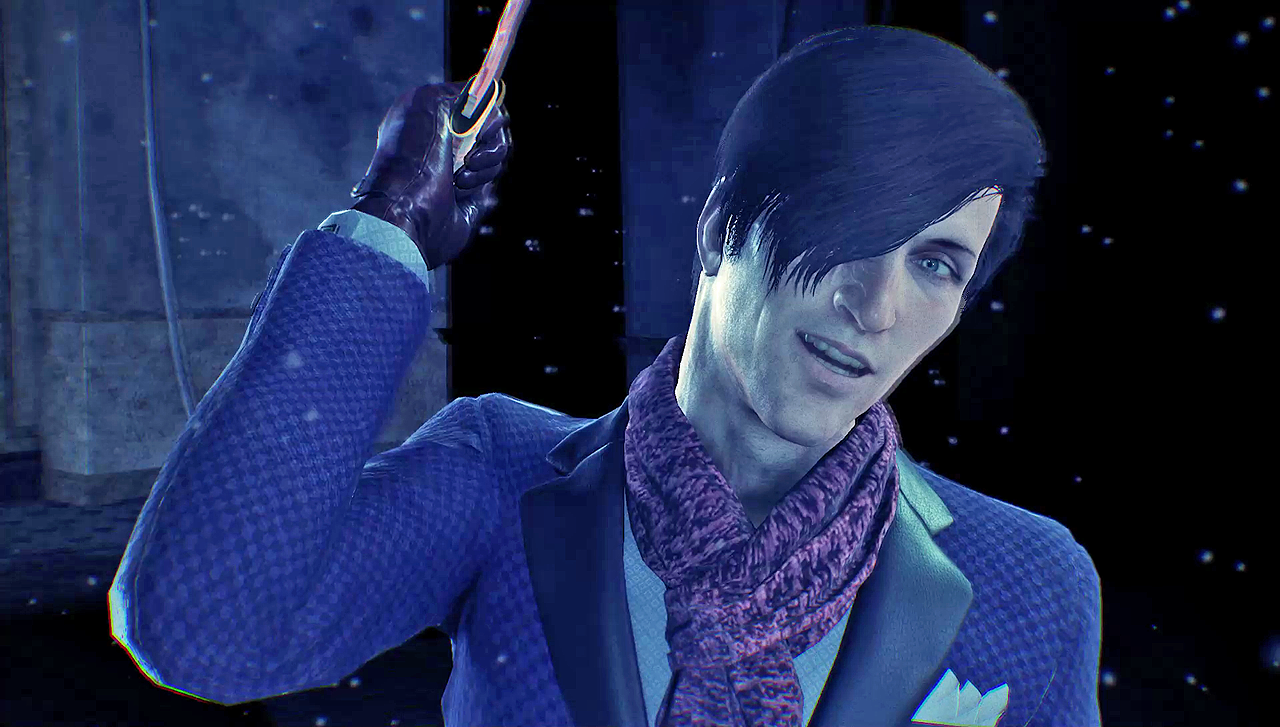
The recent TV adaptation of the Hannibal book series by Thomas Harris seems to have been a great inspiration for a good part of The Evil Within 2, and in particular that section of its plotline that is connected with Stefano Valentini, the evil photographer and sadistic serial killer who creates art with human corpses. The famous novels by Thomas Harris have been adapted several times for cinema and TV (Manhunter, The Silence of The Lambs, Hannibal (movie), The Red Dragon, Hannibal Rising) and they are centered around Dr Hannibal Lecter, who is an ingenious psychiatrist and secretly a serial killer who likes to eat his victims.

Stefano Valentini (left) and Mads Mikkelsen as Hannibal Lecter (right)

The latest version was a series made for television, written by Bryan Fuller, and although it is still new (it aired from 2013 to 2015), it already has a huge cult following, with the performaces of its protagonists, Mads Mikkelsen and Hugh Dancy, as Hannibal Lecter and Will Graham respectively, being considered iconic - especially Mikkelsen, who was a revelation.

Stefano Valentini is a bit like Hannibal Lecter; although he does not literally eat his victims, but the way he kills them and what he does to the corpses afterwards don't stray too far off. The chapters of The Evil Within 2 where he is featured have several things in common with the series, mainly in relation with Hannibal Lecter but also with Will Graham in certain details.

Stefano and Hannibal are both serial killers, hiding their criminal activity rather well, and using their day job both as a cover and a status proof. They are both agile and quick with throwing knives, that seem to be their weapons of choice.

Stefano always carries his knife with him
You never know when Hannibal will go mad and start throwing knives

Stefano is a very elegant man; he likes to dress well and has a preference for dark colors. Just like Dr Lecter, who most of the times walks around like a model on the catwalk. Both of them are art lovers and they also enjoy classical music.

Stefano (left) and Hannibal (right) are always showing off their impeccable style

Both Stefano and Hannibal have their hair styled in a side fringe, although Stefano's choice is a trick to hide his right eye, which has been replaced by a camera lens. Hannibal doesn't always wear his hair in a fringe; most of the times he has it combed back, but in Season 3 he showed his rebel side and this was reflected in his change of hairstyle and wardrobe.

The fringe adds an air of mysrtery to Stefano and Hannibal

Stefano and Hannibal both have an elegant but somewhat old-fashioned handwriting, which however matches their personal style.


Stefano's handwriting
Hannibal's handwriting

Stefano seems to be very fond of roses, as they can be seen as decoration in all the places where he is. He also loves to use them in his photos and installations in various ways. Hannibal loves roses too, and he can also be very imaginative in the use he makes of them.

One of Stefano's photographs with an unconventional use of the roses
Hannibal makes roses with prosciutto

The roses carry a lot of symbolism for both Stefano and Hannibal, as they represent love, wisdom and timelessness but also lush, intrigue and sacrifice.

Stefano posing with red roses
Hannibal posing with white roses

Apples must be Stefano's favourite fruit, as a few of them can be found in the first room where Sebastian sees him. There are green and red apples on a table, next to a silver tray. There is also a half-eaten, rotten apple in one of the Safe Rooms at Union, indication that Stefano passed from there earlier. Dr Lecter also likes apples, and he eats them regularly to keep his body healthy and fit.

"Apples! ... Yum!"
"An apple! ... Yuk!"
"I'd offer you a bite but, you know, I don't want to!"

Stefano comes up with some really insane and twisted ideas about his art projects. His installations are made of human corpses and the result is way too gruesome to describe. He seems to take inspiration from Dr Lecter, whose notorious installations are the perfect thing to see before going to sleep.

Stefano's 'Rebirth' (left) and Hannibal's 'Totem' (right) compete for the 'Goriest Installation' prize

Stefano and Hannibal have their own obsessions, which both happen to have to do with officers of the law. Although Stefano's main concern is the possession of power that will make him create his great works of art, he gradually develops a latent obsession with Sebastian, which becomes more evident as the game progresses and he shifts his focus on him, planning to produce a masterpiece with Sebastian's death. Sebastian's career is on hold during the events of The Evil Within 2, but as we know from the previous game, he is a detective, and a very good one, for that matter. Hannibal becomes obsessed with Will Graham as soon as he meets him and from a point and on it becomes a major driving force in the plot. Will is a gifted criminologist working for the FBI, and he has a very distinctive approach in his work.

Sebastian can handle shocking situations well thanks to his experience
Despite his frailty, Will is an excellent professional with great skills

When Sebastian sees Stefano for the first time, he has to stay hidden in the shadows. Stefano however senses his presence and as he walks away, he turns towards Sebastian and literally smells him. This happens at least two more times until they face each other, and Stefano even goes as far as to exclaim that the smell of Sebastian's blood is 'exquisite' during the final fight. Hannibal smells Will from close, and when Will takes notice, Dr Lecter tries to cover things up by making up a random comment about Will's after-shave.

Stefano practically groans as he smells Sebastian
Hannibal is more discreet, but still he makes his point

During the final fight between Stefano and Sebastian, Stefano may be able to attack Sebastian violently and stab him maniacally with his knife. At the end of Hannibal's Season 2, Hannibal finds out that Will knows about his secret and in the last episode he lets his evil side show and stabs Will nearly fatally in an intense scene.

Stefano gets too excited when seeing Sebastian bleed from his knife
Hannibal wants to hate Will, but in reality he can't

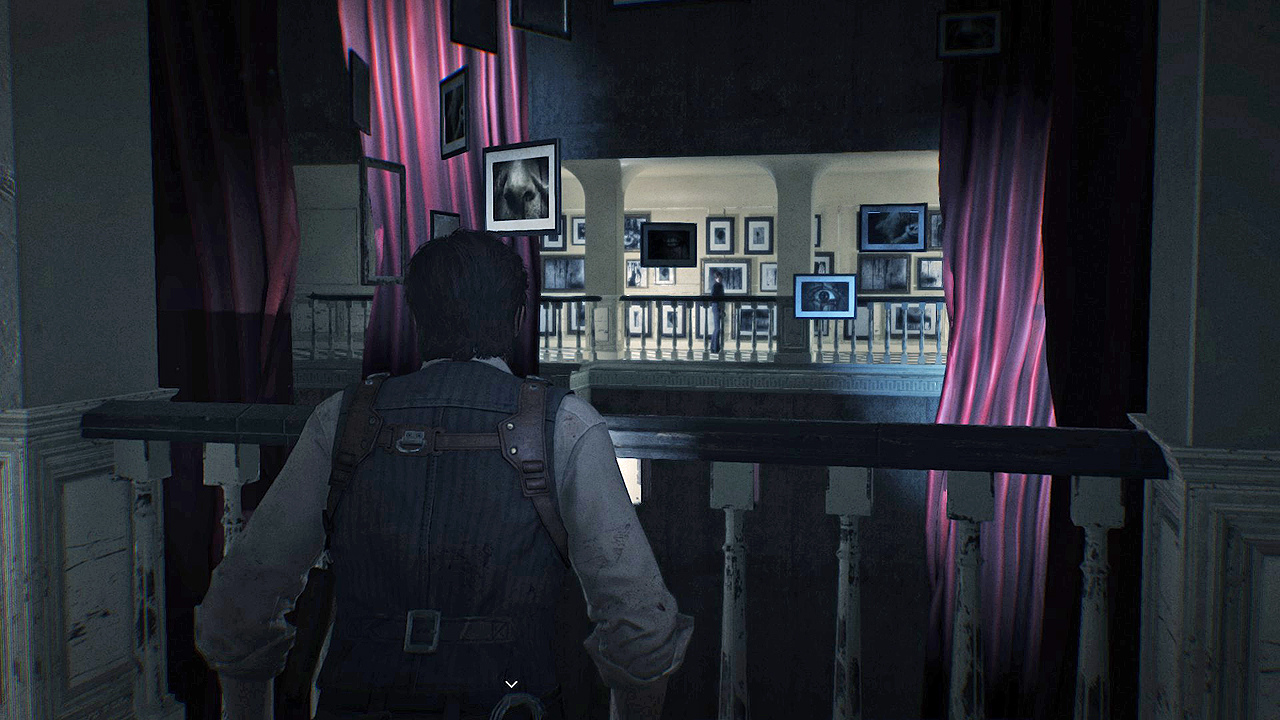
Almost all of the plot in The Evil Within 2 takes place in the virtual reality of Union, however the first half, where Stefano is the main antagonist and villain, has a peculiarity. Stefano is able to control Union, thus altering the environment around him (both literally and metaphorically) the way it suits him best. When Sebastian first enters Stefano's twisted world, it is as if he is being dragged in inside his mind. The theater, part of which we see at the beginning of Something Not Quite Right and the rest that we go through in Premiere, as well as the City Hall in Lying In Wait, look as if they have been transformed into some kind of imaginary places in Stefano's mind. Moreover, the Aperture, the huge eye that hovers above Union, sort of represents Stefano's own eye, and how things look around Sebastian, as well as himself, are all seen the way that Stefano perceives them from the inside. This whole place that he has conceived is his personal Artist's Domain, and it is some kind of museum where he keeps his works of art, away from the world.

Hannibal had his own Memory Palace, a place where he kept all his works that he wished to preserve intact. It is also the place in his mind where he communicates with Will. Occasionally, he kind of summons Will in there and they talk, separated from the rest of the world.

Sebastian spots Stefano in the distance, as he is exploring the Artist's domain
Will finds Hannibal in his Memory Palace

__________________________________


The Colours As Magical Elements of Puzzles: The Golden Lynx Puzzle in Resident Evil 4

Sunday, 31 December 2017

In spite of being a survival horror game based on action, Resident Evil 4 has several puzzles that its protagonist, Leon Kennedy, has to solve, which are either part of the main plot or that he can simply put together to get items that he can sell and buy weapons in exchange. Several of these puzzles include colored items or precious gems. The Insignia puzzle in the church with the three colored disks that you have to turn so as to open the prison door, the butterfly lamp, which needs a red eye, a green eye and a blue eye so as to be a complete artifact, the elegant mask, which requires a red gem, a purple gem and a green gem to be attached to it so as to gain its full value, are just a few of such examples.

There is one specific color puzzle however that stands out and is different from the others; it is the puzzle involving the statuette of a golden lynx that you have to make complete with finding a red stone, a green stone and a blue stone. Although this puzzle is not necessary to solve for progessing in the game and its use is mainly practical (Leon can get lots of money by selling the resulting complete artifact), it seems to carry some interesting symolism as a whole, and also as far as its individual parts are concerned, as its three stones are not simple ones; they all represent something.

Leon finds the golden lynx statuette near the start of Chapter 5-1. This section takes place in the isolated island that Lord Saddler has made his base, and where Leon goes with Ada's help after defeating the mutated Ramon Salazar in the castle. The precious statuette is hidden in a treasure chest that is sitting on a rock, deep inside a cave that is guarded by three soldiers. To get to it, you have to shoot a barrel causing an explosion that will shatter the rock behind it, revealing the secret area with the lynx.

Leon finds the beautiful statuette

First Leon finds the red stone, which is called 'the red stone of faith' and is located in Chapter 5-1 as well, inside Saddler's headquarters, in a basement room where the kitchen is, hidden in a metal case.

The red stone is in an aluminium case in a dirty basement

The second stone to be found is the green one, called 'the green stone of judgement' and it is inside yet one more aluminium case in the room where Chapter 5-2 ends and Chapter 5-3 begins, just a few areas away from the place where Leon and Krauser meet and have their knife fight.

The green stone is in another aluminium case

The last stone that Leon finds is the blue one, located again in Chapter 5-3, close to the end; specifically it is in a side room in the underground cave that leads to the ruins where the final fight between Leon and Krauser takes place. This stone is not hidden in a case, and it has a special name too, it is 'the blue stone of treason'.

The blue stone is in plain sight, in a cave

From her very first appearance in the Resident Evil series, Ada Wong was almost always wearing red. The only time when she can be seen sporting a different color is in her Assignment Ada mission, where her outfit is grey, but even then there is a red butterfly stitched on one of her top's sleeves. In the main Resident Evil 4 game she is wearing a long red dress, in Resident Evil 2 she has a mini red dress on and in Resident Evil 6 she is wearing a bright red shirt. There is no doubt that red is her associated color and therefore the red stone of faith seems to be connected to her.

Ada in her red dress

Despite the mystery that surrounds her, Ada is a constant value in the Resident Evil world. Although she avoids to open herself up to Leon, she is always there to help him and back him up. Leon may be fond of her but he does not trust her completely; he even doubts her from time to time, and Ada is unable to show him that he is wrong because that would mean exposing her real identity as well as her mission each time. But the truth is that she is a reliable person and faith is a value that describes her very well, although it may not always be so clear.

Jack Krauser, as the mercenary and soldier that he is, is associated with the green color as he is seen wearing camo-based outfits, both in Resident Evil 4 and in The Darkside Chronicles: Operation Javier. In Resident Evil 4, Jack views himself as Leon's nemesis, having returned after his fake death and seeing Saddler's orders as the perfect chance to cross paths with his ex-partner again and take revenge. In his own mind, Jack has always been right, so facing Leon and even killing him looks like a way for him to be vindicated at last.

Jack Krauser is always seen wearing green camo pants

This makes the green stone of judgement his own personal symbol, although he is not really in a position to judge anyone, having a distorted aspect of reality in his mind. However he does see himself as someone who has been misjudged and treated unfairly, therefore his judgement will put everyone (specifically, Leon) in the state where they deserve to be.

The blue color is connected with Leon, as almost all his outfits are in the blue/grey shades, the only exception being his appearance in the Tall Oaks episodes of Resident Evil 6. In Resident Evil 2 he has his blue RPD uniform on, in Resident Evil 4 his outfit is blue/grey and in the China episodes of Resident Evil 6 he is wearing a blue shirt.

Leon with his gray/blue outfit

Leon is undoubtedly a bright, good-hearted and honest man, but Jack Krauser, who obviously aknowledged and appreciated his ex-partner's qualities in the past, has stopped seeing him as such ever since he found out about Leon being in fact a government agent and not a simple soldier like himself in Operation Javier. Jack, who always sought a high rank in his career but kept struggling for it to no avail despite his intelligence and ability, got extremely disappointed when Leon revealed to him that he was literally blackmailed into accepting such a position, because in reality he didn't want it. Although this clearly was not Leon's fault, Krauser blamed him for it, although he never actually told Leon, because he saw it as some sort of treason from his partner's part. Which was a very stupid thought, since Leon didn't know Jack back then and even if he did, he wouldn't have much other choice than accepting the position of the government agent that was offered to him. From that point of view, Leon is a traitor in Krauser's eyes, which associates the blue stone of treason with him.

The golden lynx artifact with its three precious stones

These three individual stones are all attached to the golden lynx statuette, which in turn carries a major symbolism. The lynx has always been considered a powerful spirit animal with second sight, able to see what is happening in other dimensions, as well as things that other creatures are unable to see. It represents qualities such as honesty, patience, caution, reliability and great charm. All these elements seem to describe Leon perfectly; moreover, the 'golden' element matches his blond hair, his name comes from the feline realm and considering his facial features do resemble those of a lynx, we could say that the lynx statuette is associated with Leon's real self.

The lynx could be Leon's spirit animal

This means that Leon has two symbols to represent him: the golden lynx artifact, which is his own symbol, and the blue stone of treason which is the symbol that is associated with him in relation to Jack Krauser and his altered view of Leon. Nonetheless, Leon has a strong connection with him, as he does with Ada; both Jack and Ada are integral parts of Leon's life and memories, no matter how well or bad his relationship with them turned out, which is why the symbolism of the three stones being attached to the lynx becomes even more powerful and emblematic.

Life Is Strange: Before The Storm

Wednesday, 27 December 2017

Life Is Strange: Before The Storm takes place about three years before the events in the original Life Is Strange. In this game, you play as Chloe Price, Max's best friend, still bitter after Max left for Seattle and never looked back. Chloe is just as we know her and expect her to be, only three years younger and slightly less angsty and rebellious (although this probably depends on the choices you make throughout the game). The game is, in short, a chronicle of how Chloe met and became friends with Rachel Amber, who, as we know from the first game, was later murdered by the genious but evil photographer and professor Mark Jefferson.

One night in Arcadia Bay, Chloe sneaks out of home and goes to the Old Mill where her favourite band, Firewalk, are having a concert. After working her way in with all the cunning ways (yes, that's the Chloe we know), she goes upstairs in the empty attic to enjoy the concert from above at her ease. When two thugs attack her and threaten her, she is saved by Rachel Amber, the most popular girl in their school, who turns out to be a really cool person and they end up becoming friends. Chloe, who is having a hard time at home ever since her mother started dating ex-veteran David Madsen, finds a new-found happiness in her relationship with Rachel.

When Rachel sees her father kissing another woman, she gets devastated and wants to run away from home. Chloe hates David with a venom and rarely goes to her house after he decided to move in with her and her mother, so she agrees to leave with her friend. The night when they plan to run away together, however, things take an unexpected turn and Rachel is called to face a shattering revelation. The events that follow will be overwhelming for both of them, bonding the two girls even more and establishing their friendship.

Rachel and Chloe are soulmates

Several characters that we know from the first game make their appearance in Before The Storm: we have the chance to interact with Nathan, Victoria, Dana, Evan and Justin, who were later Max's fellow students in Life Is Strange. Frank Bauer, the local drug dealer, also has an important role in the plot, as he is a very close friend of Damon Merrick, the villain of the story, and we get to see more of his sensitive and compassionate side. Joyce, Chloe's mother, and her boyfriend David play a crucial part in the development of the events in Chloe's life. Apart from Rachel and Damon, the other new characters include Rachel's parents, James and Rose; Eliot, Chloe's friend and schoolmate, and a mysterious woman, Sera, whom Rachel believes to be her father's mistress.

With its narrative qualities and calm pace, Life Is Strange: Before The Storm is not just one more game. Playing it feels like watching a movie about friendship, loyalty, family values, moral dilemmas and the relativity of good and evil. The plot is split in three episodes (Awakening, Brave New World, Hell Is Empty) which are long enough to let the plot unfold but without dragging on. As a player, you control Chloe and have the chance to make your own choices throughout the scenes. Sometimes these choices are simply different replies, and other times they are important decisions that may have consequences later on, just like in the first game.

Chloe's choices may have unexpected consequences

The main characters are Chloe and Rachel, and most scenes involve both of them.We get to see how Chloe, who was so heartbroken due to Max going away, got infatuated with her new friend and her charming personality. Although coming from a rather prestigious and wealthy home, Rachel has a free, insubordinate spirit and shows a risky and careless attitude towards life, something that she manages to keep in balance with her competency at school, as she is a gifted student with an admirable intelligence. She is also very talented and pretty with great social skills, which makes her extremely popular among her peers. Soon Chloe is all over Rachel and Rachel seems to be quite smitten with Chloe, although it never becomes clear if it's a budding romance going on between them or it is just a deep and loving friendship that simply finds several ways of expression due to the fact that the two girls are going through a tumultuous adolescence.

It is not long before Chloe realizes that Rachel's ideal world is far from being ideal, and that her friend has a lot to go through and carry on her slender shoulders. In the meantime, Chloe is haunted by recurring dreams involving her father, several times depicting the accident that caused his death, while other times he appears to offer her advice which however she has to decipher as it is not always clear. Chloe cannot get over the fact that her mother fell in love with David, whom she despises (although if you have played the first Life Is Strange, you know that David is a good man who simply didn't know how to deal with Chloe). Her dreams are her refuge, but most of the times they end up being nightmares, because of her denial to come to terms with the past and move on. Her relationship with Rachel seems to light a new path in her life, but both of them have to overcome their personal struggles so as to be able to start anew. Ironically enough, we already know how bleak their future would be, with Mr Jefferson killing Rachel a few years later.

Depending on your choices, Chloe's interactions with David may not resemble a battlefield

While I don't like comparisons, comparing Before The Storm with the first Life Is Strange is somewhat inevitable; and this is mainly to underline what was that made the first game so great and why the second game, although still very good, stands a bit lower than its predecessor. Moreover, everything in Before The Storm is connected one way or the other with the original Life Is Strange, so the two games go hand in hand.

The unforgettable first game had something very dark, twisted and haunting about it which made it genuinely charming and fascinating. It had many and varied plot elements (ie, the main plotline with Mr Jefferson, the kitchen sink drama in Chloe's house, Max and Chloe's investigations, the bizzare connection between Nathan and Victoria), its characters were well-shaped and given decent on-screen time, and most importantly, it had that fantastic and powerful supernatural-metaphysical side which actually made it stand out the most. Several of these elements couldn't be applied in Before The Storm; for example, the dark element had to be lowered because in this game the main characters are underage (Chloe and Rachel, as well as their other classmates, are 15 years old); or the supernatural part had to be left out because Chloe cannot rewind time like Max could. Thus they had to be replaced with other, more familiar and realistic ones. Which means that now in Before The Storm there is a lot of time dedicated to the family drama Chloe and later Rachel are going through, as well as several other similar next-door dramas that involve classmates or friends.

The game is lovely overall, there is no doubt about that. It is atmospheric, sentimental and enjoyable to play. The environments are looking fine, and the music is amazing. The character models could take some improvement, but this is not really an issue, as it only becomes evident when they have to do certain movements (ie, when they are dancing). There are quite a few intense and heavily emotional scenes that are more than likely to bring tears to your eyes. Chloe's dream sequences with her dad are wonderful - and here is where you can see sparkles of that great dark element of the first game.

The imagery in Chloe's dream sequences is dark and compelling

What slightly messed up the experience for me were a few plot elements that either didn't make sense or were inconsistent. There is one character whom you see just a couple of times in the first episode and you are led to form a positive impression about him. He makes no appearance at all in the second episode, and then in the third one, all of a sudden, he shows a supposedly different self. You are supposed to realize at that point that he is a stalker and he has bad intentions towards Chloe. The problem is that he has had such a brief role up to then and he is so unrelated to the plot, that this whole scene comes out of the blue, considering, moreover, that it doesn't affect the progression of the events at all. I made a bad choice during a crucial conversation with him, which led to him finding out that I was secretly calling the police, however I still managed to escape, and I never saw him again until the end of the game. I wonder if the developers had other plans for him, and maybe they run out of budget or something and cut his role short.

Nathan's attitude during the play sequence is also confusing. In the game, Chloe and Rachel's class is putting on a performance of The Tempest by Shakespeare; a presentation that is put to the test several times and in various ways, but eventually is carried out successfully with a few surprises. Some time before the presentation, in a dialogue between Chloe and her classmate Steph, who is also the stage manager, Steph tells Chloe how some of the students show a different side while performing their roles; specifically she mentions Nathan, among others, and how there is so much depth in his Caliban performance. Then moments before the play, you overhear a dialogue between Nathan and his father, where they argue about something that never becomes clear. Is it that Nathan likes to be an actor and his father disapproves? Quite possibly, but we will never know. Later on, while Nathan gets on stage to say his first lines, he seems upset and frustrated, he even cries silently and swears among his teeth, then leaves the stage. However we are never shown how he managed the rest of the play; we can only assume he miraculously got to put himself together and made it to the end, as in the finale he comes out on stage and bows before the audience with the rest of the acting students like nothing happened.

That said, although the game is mainly about Chloe and Rachel, I think it should have been fair to devote a bit more time to Nathan, considering the importance of his role in Life Is Strange. We do get some hints about how he was constantly trying to adapt to the models that his father and his social circle demanded, we also get a few other hints about how he probably had a good side (there is even a photo of him and Rachel showing them smiling happily), but there could have been more development of his character, focusing on how he had to suppress himself every single day, and maybe highlight how acting in the play helped him liberate his true self and feel a lot better in his skin, justifying Steph.

Maybe if Nathan let his dark side show for real, he would be liberated

But generally in the character development field, the game could have done a lot better, especially as far as certain important deuteragonists are concerned. It is never clarified whether Sera was really a victim of circumstance or not; plus, she definitely needed more scenes in the game so that we could see if she was truly misjudged. From a point and on, Sera is a major driving force in the story, but you never have the chance to get to know her a little better. You only have a brief conversation with her near the end, which however leaves you with many unanswered questions about her.

There is also one more important theme that needed more development. Frank seems to have quite the bromance with Damon Merrick, who is the arch-villain of the story. The two of them had been friends almost since they were born and they seem to be extremely close, which makes the inevitable outcome of events even more tragic for them.

In a better world, Frank and Damon could have been happy BFFs for the rest of their lives

On another level, Frank and Damon are like a deformed reflection of Chloe and Rachel. Frank lives in the margins of society and he is sort of an outcast in the underworld, because he doesn't fit there either. He looks too bad for the good world, but he is not bad enough to belong fully to the bad world - just like Chloe. Damon, on the other hand, is the king of the underworld - just like Rachel is the queen of her school. These two guys are as different as they are similar, and they seem to have a very strong bond - just like the two girls. Their bromance had so much potential, and it deserved a lot more love in the game.

But most importantly, the main plot weakens as the game progresses. It starts off as quite promising in the first episode, putting you in the mood well enough; it almost prepares the ground for something metaphysical or mysterious during the second episode (we even get the unexpected snow like in the first game). Then everything comes into the light and you realize it's in fact a melodrama centered around hidden family secrets. On top of this, the choices that you make do not dramatically alter the outcome of events. It is not like in Deus Ex: Mankind Divided, for example, where a wrong decision may result in the murder of your friend. Or like in the first Life Is Strange where chosing the wrong way to act in the finale can lead to Mr Jefferson killing David who comes to Max's rescue. Here it doesn't matter if you just argue with the villain in the last episode or choose to be fierce enough and attack him with a knife, as the conclusion of the scene will be more or less the same either way.

I guess that what tied the hands of the story writers and they didn't add or elaborate on more elements of the plot was the fact that the main protagonists were underage. This fact alone automatically lowered the level of character development and the amount of more complex details that could have found a place in the game otherwise, as the story had to revolve around the two girls and anything that was related to them had to be in balance with their young age.

But the game is very good nonetheless. It will hold your interest and attention from beginning to end and it has its fair share of captivating scenes and some strong, memorable moments. What it needed was a bit more complex plot, a few more twists and to elaborate more on some themes and characters. The thing is, if you have played the incredible first game, your expectations are inevitably high and Before The Storm, although it will definitely find a place in your heart, will leave you with the feeling that something great could have been made with it, but for some reason didn't happen to the extent that it was promising. If you focus on the sentimental part and try to ignore all that doesn't sit that well or that remains vague, you still have a sweet game with decent replay value, as you may want to try all the possible choices and decisions to see where they lead. Playing as Chloe is cool, and if you get the DLC pack, you can choose to dress her up with a variety of cute and fancy outfits. Also it is worth the while to read her journal; or should it be called 'Letters to Max'? It is a delightful collection of unsent letters to her old friend, where apart from narrating the events of the game in her own hilarious style, she never misses to pick on Max about leaving and forgetting her, making her funny, sarcastic comments in any given instance.

There Is No (Christmas Season) Rest For The Weary (and The Wicked)

Wednesday, 13 December 2017

Some time ago I realized that a few of the most memorable adventures in the Resident Evil series take place during the Christmas season. I don't know if this is random or if it was a conscious choice from part of the scenario writers for some reason, but in any event it is a very interesting detail that deserves some exploring.

The events in Code Veronica happen three months after the Raccoon City incident which, as we know from both Resident Evil 2 and Nemesis, occured on the 28th of September 1998. This puts Claire Redfield in Rockford Island on around the 27th or 28th of December of the same year, that is in the heart of the Christmas holidays. The time of year doesn't seem to play a part in the story as it develops in the original Code Veronica game. In The Darkside Chronicles: Game of Oblivion, however, which is a retelling of the Code Veronica story, there is one reference in the opening scene of the scenario: we see Alfred holding a snow globe with a scenery showing two little children playing in the snow.

The two children in the snow globe depict little Alfred and Alexia

This scene, albeit brief, is particularly strong as it demonstrates Alfred's growing insanity, partly due to the seclusion he's been subject to on the isolated island. It is Christmas season, yet nothing around him is festive, and the only happy scene he sees is the one in the snow globe, which represents his obsession with the past and his denial to see things as they are. Deep inside, he never grew up and he prefers to view both himself and Alexia as little kids, going back to a time where they were supposedly careless and happy.

The snow globe is the last thing that he holds in his hand before he dies, in a version of the story that strays off the original scenario of Code Veronica.

Alfred holds the snow ball in his hand while Alexia is killing him

In the Game of Oblivion version, Alexia, after waking up from her long slumber, mutates thanks to the Veronica virus and, before going after Claire and Steve, she attacks her brother, who is already heavily wounded after falling off a long drop during the fight with Claire and Steve, and kills him. As he dies, the snow globe drops from his hand and shatters on the floor.

The broken snow globe symbolizes not only Alfred's death but also the shattering of his delusions

For Claire and Steve, this is no Christmas season either, as they find themselves on the eery grounds of the prison, where soon they are surrounded by zombies.

The cold air and, later on, the snow are the only elements that hint at the time of year

Neither of them has a mind for anything festive; Claire is desperately searching for her brother, and Steve was imprisoned together with his father who, as we find out later, turns into a zombie and Steve is forced to kill him to save Claire. Christmas is the last thing they could possibly think of, as their main concern is to survive. However the fact that all this happens during the Christmas days, intensifies the tragic essence of the story: Claire and Steve are two innocent young people who, at this time of year, should have been in a nice place, having a good time with friends and family, yet they are trapped in a nightmare. Same goes for Chris, who comes to Claire's rescue and finally reunites with her in Antarctica, in the Umbrella facility there.

The cold setting of the North is the opposite side of the Christmas season. We usually identify Christmas with snow, but this identification has only positive connotations. Antarctica in Code Veronica is an unfriendly and deserted snowy place where danger and death lurk around every corner.

The Antarctica facility is not exactly the snowy place you'd choose for a Christmas vacation

Fourteen years later, and specifically on the 24th of December 2012, Chris Redfield had the most traumatic experience of his army life. In Resident Evil 6, while in China with memoy lapses, he has a flashback and recalls the tragic events of his mission in Edonia. The (imaginary) eastern European city is covered in snow as Chris arrives there with his team; there are no civilians anywhere, and although it is Christmas eve, not even a hint of festive element can be seen in the streets or behind the house windows of the war torn Edonia.

Christmas time here would have been idyllic in other conditions

Later on, as they enter the City Hall, the whole place is full of dead people trapped in coccoons. The only other living human being they encounter is Carla Radames, who apparently had been hiding in the building all this time. If Chris and his soldiers have to forget about the Christmas season because the duty calls them, Carla obviously doesn't even care for it.

There is nothing festive about the lights and candles in the City Hall

The disastrous end of the mission leaves Chris devastated, making this yet one more Christmas season in his life that will be unforgettable for all the wrong reasons: Carla reveals her true intents and attacks his soldiers with a lethal ball that throws infected needles on them, instantly killing them and turning them into monsters.

Carla's perception of Christmas ornaments is rather extravagant

On the same evening, somewhere in the snow-covered mountains of Edonia, Jake and Sherry struggle to make their way to a shelter, while running away from bloodthirsty mutated soldiers. The scenery around them looks naturally christmassy in the cold night with all the imposing cypresses, but in fact it is not friendly at all, and the snow can easily become a lethal trap for the two heroes.

The cypresses remind Jake and Sherry that it's Christmas eve

After a long chase that involves snowmobiles and an avalanche, Jake and Sherry end up in a cave which could have been a wonderful setting for a romantic Christmas day. What awaits for them in there, however, is anything but. Ustanak, Jake's relentless stalker, is guarding the place and although he gets defeated at some point, he eventually comes back to life, leading them directly to Carla's hands.

Jake is the perfect gift for power-hungry Carla

This happens on the 25th of December, but neither Carla nor Jake or Sherry have the time or mood to realize it's actually Christmas day. Maybe Carla did a little bit at that point, since her biggest desire was to capture Jake and use his antibody, and she actually managed it, achieving a rather illusive and very temporary victory.

The Bizarre Futuristic Paradise of Deus Ex: Human Revolution & Deus Ex: Mankind Divided

Sunday, 10 December 2017

The year is 2027. Biotechnology has achieved giant steps and now people have the chance to replace or boost parts of their body with hi-tech mechanical limbs, so that they are more effective and productive in their work and other activities. This seemingly ideal evolution however hides lots of traps because, on the one hand the robotic limbs, no matter how perfect they may be, remain machines that can go wonkers at any time, and on the other there are always people willing to take advantage of such a promising technology for their own personal gain - be it sheer ambition or desire for riches.

Although luxurious, modern Detroit has an atmosphere of abandonment

Two years later, the world is divided between the 'natural' and the 'augmented' people. This is, in a nutshell, the setting of Deus Ex, as we see it in the last two video games of the series, Human Revolution and Mankind Divided and, more specifically, through the eyes of their protaginist, agent Adam Jensen. The message that the basic story of those two games carries is more than obvious: racism, social exclusion, acceptance of diversity or lack thereof, and also about how the thoughtless use - or better, overuse - of modern technology can have devastating consequences.

The beautiful and epic Human Revolution is a grim and gloomy futuristic tale that narrates how taking advantage of technology can make you prosper or ruin your life and the world around you, while in the equally charming and immersive Mankind Divided, the damage seems to already have been done, as the ‘natural’ people are more often than not extremely suspicious – hostile, even – towards the augmented citizens.

The busy platform in Prague hosts both 'natural' and augmented citizens

A gifted and intelligent ex-cop, Adam Jensen was one of the victims of a vicious attack that caused him multiple mutilations. While he was comatose on the surgical bed, his boss, David Sarif, owner and developer of advanced prosthetic technologies, decided to replace several of his destroyed limbs with mechanical ones. Upon waking up, the new Adam has, among other things, robotic legs and arms, mechanical breathing system, improved vision, and a brain chip that allows him to ‘scan’ the character of the people he interacts with, subsequently being able to influence their course of thought and reaction.

Adam, the enigmatic David Sarif, specialized genetist Megan Reed who also happens to be Adam’s ex-girlfriend, tech guru and hacker Frank Pritchard, Jim Miller, Adam’s boss in Prague, Alex and Farida, the tough pilot girls, Vaclav Coller, (mad) scientist and Adam's doctor and friend, are all part of a different world where everything, from science and medicine to fashion and art, are viewed through a futuristic and post-apocalyptic prism.

Adam is a very charming character in all his versions

Detroit in 2027, as it is depicted in Human Revolution, seems like it comes straight out of a science fiction movie, with its aerial railways and hyper-modern apartment buildings looking compelling and mysterious in the gloomy lighting. As most of the story takes place in the afternoon and night, the light sources are mainly electric, something that adds a lot to this atmosphere of artificiality and coldness. The yellow tones dominate, coming to contrast with the dark backgrounds. There are people in the streets, but everybody is either sulky or ready for a fight.

Prague in 2029, which is the main setting of Mankind Divided, seems to have incorporated all the modern elements and combined them with its traditional ones. Which is why we see elaborate subway stations and futuristic offices, as well as scenic parks and vintage-looking houses. Here there is a lot of action taking place in plain daylight, and we can admire the bright colours in the gardens, the graffiti on walls, the blue sky, the colourful windows of the stores.

A view of a characteristic spot in Prague

However in both cases we notice that underneath the evolved surface, nothing has truly changed in the essence: drug dealers, ruthless gangs, organized crime still carry out illegal activities in the margins of society, within the limits of an underworld that has way too much in common with the one of good old yesteryears. At the same time, the ordinary world goes on with its everyday routine. Only that now, among the ‘natural’ people, exist those who have undertaken mechanical augmentations and, after some point, are considered outcasts of society. In Mankind Divided, we can see this very clearly, when Adam takes the subway train for 'natural' people by mistake: some of the passengers look at him with contempt and anger - still,  he manages to remain cool.

The passengers don't like it that Adam invaded their 'natural' space

With the supporters of this new reality on the one side, its devoted enemies, who wish for a completely purged and natural human nature, on the other, and above everyone else those who want to use the new technology to gain power and manipulate the world, Adam finds himself in a whirlwind of events that affect him in more than one ways. Adam is an augmented man and therefore belongs, technically, to the first group. His moral values, however, are in constant conflict with this, because on the one hand ‘he never asked for this’ and on the other he is not sure what kind of life he would prefer, supposing he had been given the chance to choose. Just like his namesake Adam of the Bible, Adam was created (or better, re-created) not exactly from dust but from the remains of his human self. But still, his thoughts and feelings remain 100% human, something that is constantly in debate with the almost supernatural powers that he has gained thanks to his advanced transplants and their hi-tech enhancements.

Adam is always saturnine and it feels like he can't find peace of mind

Unlike Frank (or Francis, as Adam likes to call him), who willingly and consciously chose to get his brain augmentation, or Megan, who views the whole matter from a strictly scientific aspect even if this means the impingement of anything moral, Adam is always concerned whether what he does is right or not. He is, in the essence, a marginalized anti-hero who may get compliments about his impressive looks, but he is also the target of unfair and offensive comments due to the fact that he is augmented.

It’s not easy at all for Adam to adapt to the new conditions, however in Mankind Divided we find him more stoic and cynical, something that was expected to happen anyway since in Human Revolution he had discovered that both Megan and David had taken advantage of him and had, more or less, betrayed him in a way. And although he got to a compromise with David, his relationship with Megan was never restored. It is notable that while he started off being so close with Megan and David, he ended up alienated from them, while his relationship with Frank, although it was antagonistic at first, then moved to a sui generis level of friendship and respect.

Adam and Frank like each other much more than they dare to admit

Equally, in Mankind Divided Adam’s relationship with his boss passes through thick and thin. Jim Miller, head chief of Interpol’s Task Force 29, is a tough and decisive commander and soldier, but is also a man with a tumultuous and unusual family life. Miller looks cold and insensitive, but Adam, who is able to see behind the surface, can discern and estimate all the good sides of his chief’s character. And Miller deep down always liked Adam and trusted him, both as an agent and a friend, although he did not always let it show.

Adam saves Miller's life and Jim confesses that he always trusted him

In the charming universe of the two games, the characters appear in outfits that look like contemporary ones, but are also combining both vintage and futuristic elements. Same goes for the environments and the objects that we see in them. In the apartments we can see hi-tech devices next to gramophones or old-style display cases. Megan is seen wearing very modern leather pants and boots with metallic details, but she also has a pearl pendant hanging round her neck. Men's fashion is characterized by the same fusion style, with stylish boots and vests combined with classic shirts and haircuts.

The undercover agent Arun Singh in his very trendy outfit

This mix of time and style points to the fact that modern man is afraid of and unable to handle all the knowledge and information that are received everyday and is still clinging to the past to look for ideas, inspiration or simply for something to behold, since the future, as fascinating as it may be, will always remain uncertain and vague.

The undergrounds of the cities, however, still remain the same: dark, filled with dangers and mysteries – just like the human subconscious. Secret cults, cruel mafia bosses, serial killers roam the sewers and basements, waiting for the right moment to show themselves and demonstrate all the evil that they can do. The lethal gangs of Derelict Row in Human Revolution will stop at nothing to impose themselves in Detroit and establish their ‘kingdom’. Otar Botkoveli in Mankind Divided is an old school Mafioso whom Adam is able to tame by talking to him the right way, but who will very easily go mad when Adam ignores his request and will take revenge on him in a most painful way.

Why Botkoveli's black list includes exclusively young people, remains a mystery

The politicians and their strategies are not much different from the past either: demagogy, direct or indirect mass manipulation, taking all means necessary to establish power, everything that was always happening, is still happening and is doomed to go on happening as long as there are people on this planet. The rich are richer, the poor rarely manage to make their life better, the multinational corporations are spread everywhere. And all this, under the illusive veil of fake prosperity that the abunance of material things create. This image of the future is more or less like Adam; impressive and evolved on the surface, but with an inner melancholy that has become part of its being and is almost impossible to go away.